 Installing solid-surface countertops yourself can be a challenging task for even the most avid DYIer. This is why so many professional services exist – to help navigate all the challenges and issues the layman is likely to encounter when trying to get a professional, long-lasting look in their countertops.
If you are an avid DYIer, however, and want to tackle the task yourself, we’re here to give you some basic advice and a guide to some of the procedures involved. If you’re attempting this yourself, these are handy tips to getting started. If you’re hiring a professional, like the experts at Solid Surface Canada, then this guide will tell you what to expect when the contractors begin work.
Level the Base Cabinets
Countertops rest directly atop the cabinets below, and solid surface countertops are no exception. If the cabinets aren’t of a consistent height, then the countertops will not lie flat when finally installed. That could lead to cracking and other structural damage, as well as simply not giving you a uniform work surface to deal with!
If sections of your counters are too high, a belt sander or coping saw can be used to trim them down to size. If they are too low, simple shims can be used to raise the countertop, keeping the height consistent over the length of your counter.
Add the Necessary Supports
Sometimes there will be gaps in your cabinets where you’ll want your countertop to go. Maybe you’re installing a new dishwasher or a small refrigerator – you’ll want your countertop to run over them, but you won’t have cabinets below to provide support. You can use 2×2 lengths of wood, called “cleats”, for support.
Screw the cleats directly into the wall, or into the cabinet bases on either side of the appliance. You’ll want to ensure that these cleats are out of sight, so they don’t interfere with the aesthetics of your kitchen. You’ll also want to ensure that their location won’t interfere with the installation of the appliances later.
Countertop Installation
You’ll want to use painter’s tape along the top edge of your countertops, to prevent the glue from sticking to them. Then, apply a bead of quality construction adhesive atop the cabinets, and gently set the solid surface countertop onto the cabinet tops. This may require two people to ensure everything is laid down gently and smoothly; it can often be too bulky for a single person to complete this task.
When you have the countertop properly aligned, simply push down on the countertop, causing it to bond with the adhesive.
Sink Installation
Most sinks come with a template for cutting. Using this template, carefully sketch out the pattern on the countertop that you’ll be cutting. Make sure that the back of the sink will be a consistent distance from the wall, and that it’s set back far enough so that the sink avoids the base cabinet.
Then, use a hole saw to create a starting place, and a jigsaw to actually cut out the opening for the sink. You’ll want to apply plumber’s putty around the lower edge of the sink to ensure a water-tight seal before setting the sink into the hole.
Push the sink down firmly, and remove any putty that squeezes out. Your sink should come with clamps; use them to secure the sink to the countertops. After that, it’s a matter of just installing the faucet and attaching it to the plumbing.
Conclusion
It’s a complex task, but with the proper tools and expertise, you can successfully install your own countertops.
If, however, you want the benefit of experienced contractors with years of experience, or simply need some more personalized advice on how to continue, please don’t hesitate to contact us. We’re glad to help with the fabrication and installation of solid surface material, and we promise to bring the absolute best experience to each and every one of our clients.
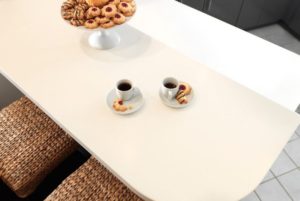 A solid surface countertop is one of the most functional and durable surfaces out there. It’s versatile and easy to maintain and comes in a wide variety of colors and patterns. Whatever brand you end up going with, solid surface countertops are a great selection for your
 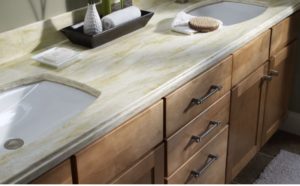 Cultured marble is a relatively new material used for countertops and other home renovation purposes—it’s less than 40 years old. A blend of marble and resin, cultured marble is cheaper, easier to care for, more versatile and easier to install than natural marble, making it a very popular choice for people looking for a marble look but without the headaches of dealing with the actual natural material itself.
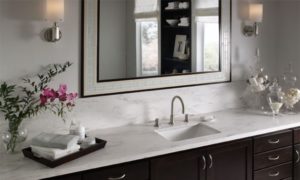 The phrase “solid surface” can be a bit confusing when you’re first learning about countertops and their potential materials. After all, aren’t all countertops a solid surface? However, when your contractor or renovator uses the phrase “solid surface countertops”, they’re referring to a specific man-made surface that has brought a significant new option to kitchen and bathroom renovations.
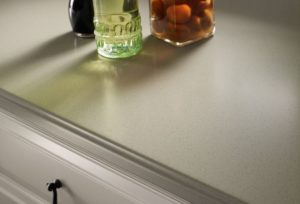 When you opt to install kitchen countertops, there are dozens of different kinds of surfaces to choose from. One of the most popular is a solid surface, like DuPont’s Corian or other similar brands. The man-made surface has several significant pros over more natural countertops like granite or marble, though it comes with its drawbacks as well. Here are some solid surface countertops pros and cons to help you make your decision.
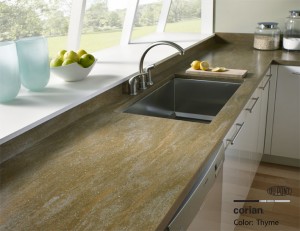 Corian countertops
 Healthcare facilities must adhere to a rigid set of criteria regarding building materials both during general construction and the build out. Because people’s lives are at stake there is no fudging the rules or cutting corners. Materials must meet established standards or they won’t make the cut; simple as that. When it comes to hospitals, clinics and doctor’s offices the challenge facing architects and healthcare professionals has long been to find a material for countertops that will allow for the maintenance of a safe, sterile environment. In this post we’ll look at several reasons why solid surface may be the perfect clinical building material.
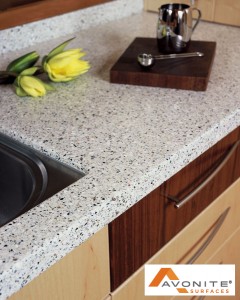 “Solid Surface” is a man-made material commonly used for countertops in both residential and commercial settings. Due to its ability to mimic the look of natural stone like granite it generated great demand right from the time of its introduction in 1967. Today Corian, Wilsonart and other brand name


 Copyright © 2026 · Solid Surface · Web design by